
Introducing Therapeutic Interchange Management Copied
iKnowMed Generation 2 will support Therapeutic Interchange Management (TIC), giving practices the tools to define preferred drug selections within therapeutic groups and to apply payer-specific rules that automatically align regimen orders with insurance requirements.

What’s new
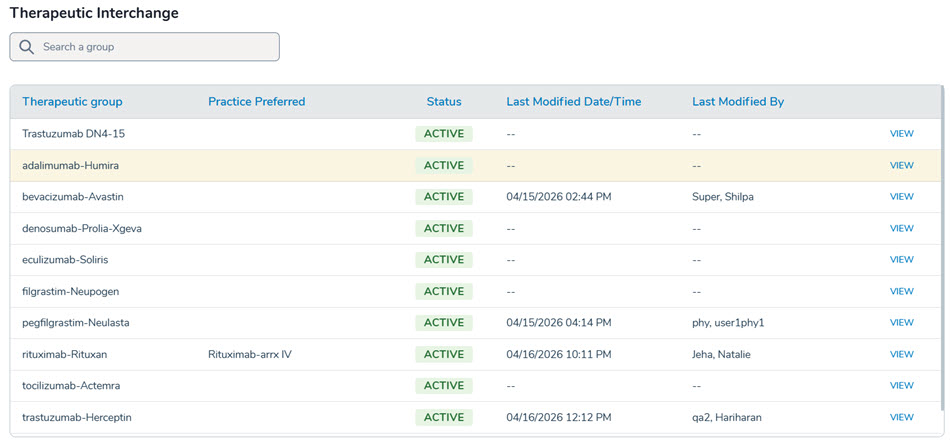
Access to TIC is governed by the Therapeutic Interchange permission in the user profile. After this permission is granted, navigate to Manage > Therapeutic Interchange to view the therapeutic groups available for configuration.
Select a therapeutic group and click View to designate a preferred selection and configure payer-specific rules that will apply to patient regimen orders entered at your practice.
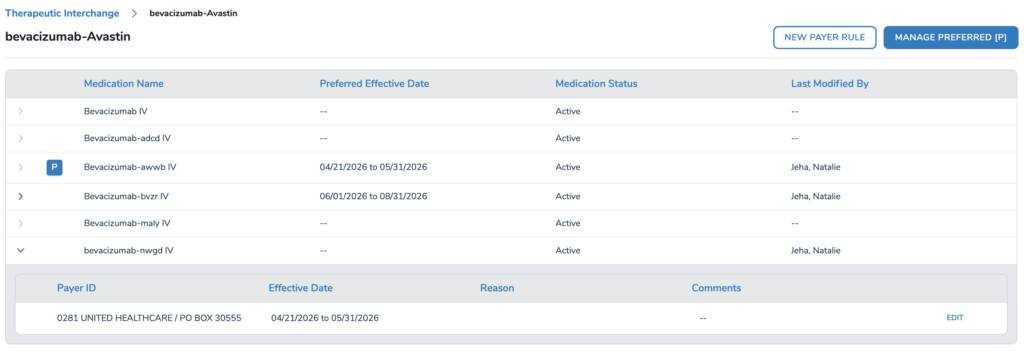
A Practice Preferred drug can be configured for selection in place of the selected order in the regimen template. If no Practice Preferred drug is configured for the therapeutic group, the drug specified in the regimen template remains selected in the patient order.
TIC managers can also create payer-specific rules that override the practice’s preferred drug selection, ensuring compliance with requirements from payers. If no configured rule applies to the patient’s active insurance entries, the Practice Preferred drug is selected for the patient regimen order.
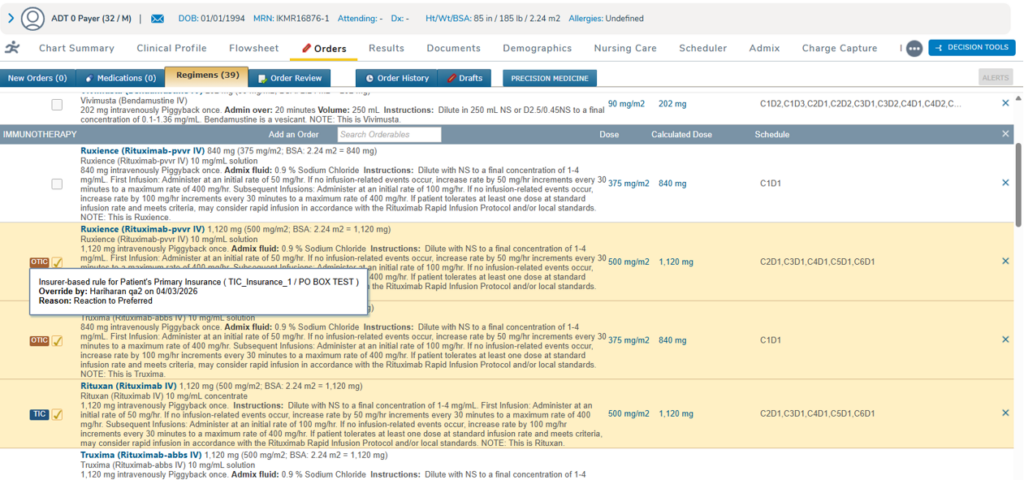
Please Note: Clinicians can change the selected order when TIC settings have been applied. They will be presented with a screen where they must document the reason for the change. That reason is visible to downstream users in the workflow for clarity, while they retain full control over patient treatment decisions.
Regimen orders with drugs impacted by TIC settings are identified in the regimen draft and applicable worklist queues with colored icons:
- Blue TIC Icon: Practice preferred drug or payer-based rule applied
- Orange OTIC Icon: Clinician override of a drug selected by a TIC setting
Why this matters
For practices navigating expanding therapeutic alternatives and shifting payer preferences, TIC helps ensure therapy aligned with the practice and payer preferences is selected at the point of new regimen order entry, reducing downstream rework, denials, and delays.
TIC supports a clear and transparent workflow by displaying the rationale for applied substitutions, capturing any clinician overrides with documented reasons, and reducing the operational burden on practices.